
Farm Insurance Online :: News
SHARE

Share this news item!

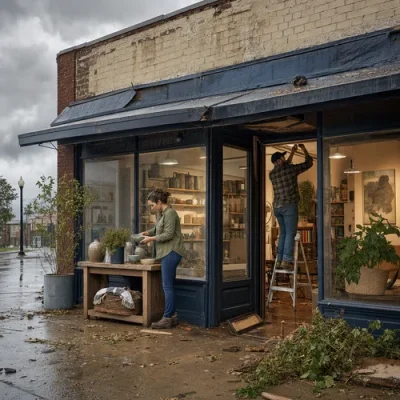
Disaster Recovery Gap Puts Retail Resilience in Focus

New QBE-commissioned research shows severe weather can affect small business numbers well beyond the clean-up phase

Disaster Recovery Gap Puts Retail Resilience in Focus?w=400

The information on this website is general in nature and does not take into account your objectives, financial situation, or needs. Consider seeking personal advice from a licensed adviser before acting on any information.

Fresh research commissioned by QBE and conducted by Oxford Economics Australia has put a longer lens on disaster recovery for small businesses, finding that the economic effect of floods, bushfires and cyclones can deepen well after the initial clean-up.
For Australian retailers, the message is practical: recovery planning and insurance settings need to reflect more than the first few weeks after a major event.

The report, released in October 2026, examined seven significant Australian disasters between 2018 and 2023 and compared affected communities with similar areas that were not hit by a major disruption. It estimated that affected regions had around 3% fewer small and medium enterprises than expected in the year of an event, widening to 4% after one year and 9% after two years. By the third year, the gap was still around 7%.

Those figures do not mean every missing business was directly destroyed by weather. QBE’s own commentary notes that disaster can slow new business formation, reduce investment and exhaust the reserves that allow firms to keep trading in the immediate aftermath. Even so, the pattern is important for shop owners because retail recovery often depends on factors outside the shop itself: customer foot traffic, staff availability, freight routes, nearby anchor tenants and whether the broader shopping precinct comes back to life.

This is where insurance design and business continuity planning meet. Property cover may help with damaged fit-out, stock or equipment, depending on the policy. Business interruption cover, where held, raises a different question: how long would revenue realistically take to recover after a major loss? A short indemnity period may look affordable at renewal, but it can be tested if rebuilding approvals, replacement stock, supplier delays or a damaged local economy stretch recovery over many months.

Retailers reviewing common retail disasters should also look beyond the headline insured event. Useful checks include current stock values, seasonal peaks, replacement cost assumptions, lease obligations, flood or storm exclusions, waiting periods, sub-limits and whether temporary trading costs would be recognised. Educational tools can help businesses estimate replacement values, but final cover decisions still depend on policy wording, insurer appetite and the individual business circumstances.

The report is also a reminder of uncertainty. It was commissioned by an insurer and analyses community-level outcomes, not individual claim results. However, its broader point is difficult to ignore: a disaster recovery plan that ends when the doors reopen may be too narrow. For shop owners in exposed locations, resilience is increasingly about surviving the second year as well as the first week.

Published:Thursday, 5th Nov 2026
Author: Paige Estritori

Please Note: We do not endorse any specific products or companies. Some content is sourced from third parties, including press releases, and may not be independently verified for accuracy or completeness.

Share this news item:

Rate this article

0 Comments

No comments yet. Be the first to share your thoughts.

Insurance News

New Stallholder Cover Puts Market Liability Back on the Agenda
25 Nov 2026: Paige Estritori
Market Lane Insurance Agencies’ expanded Lloyd’s-backed product range has added another option for eligible Australian stallholders, with its Gateway platform now offering annual public and products liability cover for market traders. The development is timely as summer markets, school fetes, local shows and food events increase the number of small operators selling in public spaces. - read more
Regulator’s Claims and AI Focus Has Farm Insurance Lessons
25 Nov 2026: Paige Estritori
ASIC’s newly announced 2027 enforcement priorities put poor insurance claims handling, undelivered pricing promises and poorly implemented technology squarely in the regulatory spotlight. For Australian farmers, the message is practical rather than abstract: as farm insurance becomes more digital, policyholders need clear records, up-to-date asset values and a willingness to ask for human review when a decision does not reflect the reality of a rural loss. - read more
Why changing work patterns are testing income cover
24 Nov 2026: Paige Estritori
New Zealand’s income protection market is being forced to think harder about how people actually earn a living, after fresh industry reporting highlighted the pressure that artificial intelligence, contracting, gig work and multiple income streams are placing on traditional policy design. - read more
AIA’s new business cover highlights a blind spot for owners
24 Nov 2026: Paige Estritori
AIA New Zealand’s launch of AIA Working on 20 November 2026 is a timely reminder that life insurance decisions are not only personal for many New Zealanders. For business owners, farmers, contractors and self-employed professionals, the death, illness or disability of a key person can affect family income, staff, debt obligations and the value of the business itself. - read more
Strata Insurance Gap Widens Between Well-Managed and Riskier Buildings
24 Nov 2026: Paige Estritori
Fresh reporting on Australia’s strata insurance market points to a more divided renewal environment for landlords who own units, townhouses or mixed-use property. Marsh’s 2026 strata market update, reported by Insurance News on 19 November 2026, suggests some well-presented schemes are seeing more competitive outcomes, while buildings with defects, complex occupancy, claims problems or higher catastrophe exposure remain under pressure. - read more


Farm Insurance Articles

Comparing Insurance Options for Mixed Farming: What Rural Owners Need to Know
Welcome to our comprehensive guide on comparing insurance options for mixed farming. As a rural farm owner, you face unique challenges that require specialized insurance coverage to protect your livelihood. - read more
How to Protect Your Farm Investments with the Right Insurance Plans
If you are running a farm, you already know that it is more than just a business; it's a way of life. Your farm is a culmination of hard work, valuable resources, and significant financial investments. - read more
Risk Mitigation: Best Practices for Rural Farmers
Risk mitigation is a strategy used to prepare for and lessen the effects of potential risks faced by rural farmers. It involves identifying potential threats and taking proactive steps to minimize their impact. - read more
Farm Insurance Comparison: Secure Your Farm with the Right Coverage
As a farm owner, your livelihood depends not only on the hard work you put in but also on the protection you have in place against unforeseen events. Farm insurance is crucial in safeguarding your investments, ensuring that your operations can continue smoothly even when faced with unexpected challenges. - read more
Understanding Public Liability Insurance for Livestock and Crop Producers
Public liability insurance is a critical component for the agricultural sector, serving as a protective measure for livestock and crop producers against the legal liabilities they face in their daily operations. This type of insurance is designed to cover the costs associated with third-party injuries or property damage that occur on farm premises or as a direct result of farming activities. - read more

Knowledgebase
Endorsement:
An amendment or addition to an existing insurance policy that changes the terms or scope of the original policy.