
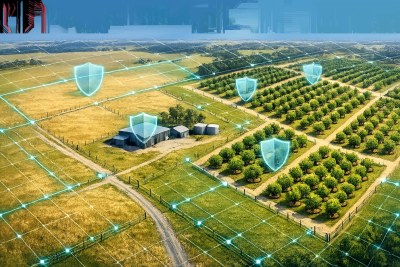
Carbon Project Land Sales Put Farm Insurance Reviews in Focus
Tree planting, carbon credits and mixed land use can change the risk profile of rural properties
3
The information on this website is general in nature and does not take into account your objectives, financial situation, or needs. Consider seeking personal advice from a licensed adviser before acting on any information.
ABC Rural’s 21 November 2026 report on the sale of Rushy Lagoon in north-east Tasmania and Cobungra Station in Victoria’s high country has put large-scale carbon projects back in the rural spotlight.
The two properties, together covering more than 50,000 hectares, are being repositioned for tree planting and carbon-related ventures after sales finalised in August.
For farm businesses watching the trend, the insurance lesson is broader than carbon: when land use changes, the risk profile of the property can change with it.
The issue is not that carbon farming is automatically riskier than grazing or cropping. It is that changing part of a working property from livestock, cropping or mixed farming into forestry, environmental planting or carbon sequestration can alter what is exposed to loss. Fire behaviour, access tracks, fencing, pest and weed controls, contractor activity, machinery movements and neighbouring-property interfaces may all look different after a project begins.
That matters for commercial farm insurance because policies are usually built around declared activities, assets, locations and sums insured. A paddock used for grazing may carry a different practical exposure from a planted carbon area with young trees, spraying work, firebreak maintenance, access restrictions or third-party project partners. If those changes are not reflected in policy schedules, disclosure answers or risk information, a future claim may become more complicated than expected.
Farm operators considering carbon income may wish to work through several general questions before planting or signing a project agreement:
whether the insurer or broker has been told about the proposed land-use change;
whether new fencing, tracks, water infrastructure, sheds, machinery or technology should be included in asset records;
whether public liability, contractor liability and visitor access exposures have changed;
whether fire management plans, access points and emergency water sources are clearly documented;
whether carbon credit income, restoration costs or contractual penalties are excluded from ordinary farm cover.
There is also an important distinction between insuring physical assets and managing carbon scheme obligations. Under the Australian Carbon Credit Unit framework, sequestration projects can carry long permanence obligations and ongoing monitoring requirements if stored carbon is later affected by events such as fire, flood, pest attack or poor management. Standard farm policies may respond to insured damage to listed property, but they should not be assumed to cover carbon credit losses, regulatory obligations or contractual liabilities unless the wording clearly says so.
For neighbouring producers, large plantings may raise practical questions about fire spread, weed pressure, pests and access across district roads or shared boundaries. Project proponents in the ABC report argued that carbon and forestry projects can involve active management of fire, weeds and pests. Even so, the insurance takeaway is simple: major operational changes should trigger early record updates, policy wording checks and careful discussion before the next renewal, not after a loss has occurred.
Please Note: We do not endorse any specific products or companies. Some content is sourced from third parties, including press releases, and may not be independently verified for accuracy or completeness.
Market Lane Insurance Agencies’ expanded Lloyd’s-backed product range has added another option for eligible Australian stallholders, with its Gateway platform now offering annual public and products liability cover for market traders. The development is timely as summer markets, school fetes, local shows and food events increase the number of small operators selling in public spaces. - read more
ASIC’s newly announced 2027 enforcement priorities put poor insurance claims handling, undelivered pricing promises and poorly implemented technology squarely in the regulatory spotlight. For Australian farmers, the message is practical rather than abstract: as farm insurance becomes more digital, policyholders need clear records, up-to-date asset values and a willingness to ask for human review when a decision does not reflect the reality of a rural loss. - read more
New Zealand’s income protection market is being forced to think harder about how people actually earn a living, after fresh industry reporting highlighted the pressure that artificial intelligence, contracting, gig work and multiple income streams are placing on traditional policy design. - read more
AIA New Zealand’s launch of AIA Working on 20 November 2026 is a timely reminder that life insurance decisions are not only personal for many New Zealanders. For business owners, farmers, contractors and self-employed professionals, the death, illness or disability of a key person can affect family income, staff, debt obligations and the value of the business itself. - read more
Fresh reporting on Australia’s strata insurance market points to a more divided renewal environment for landlords who own units, townhouses or mixed-use property. Marsh’s 2026 strata market update, reported by Insurance News on 19 November 2026, suggests some well-presented schemes are seeing more competitive outcomes, while buildings with defects, complex occupancy, claims problems or higher catastrophe exposure remain under pressure. - read more
Keyperson insurance is a specialized type of business insurance designed to protect companies from the financial repercussions of losing a critically important team member. This type of insurance provides a payout that can help stabilize the business during the transition period following the loss of a key individual. In the context of farming, this might include someone who holds a unique skill set, deep agricultural knowledge, or critical business acumen that drives the success of the farm. - read more
Welcome to our in-depth exploration of Machinery Breakdown Insurance—a safety net that's becoming increasingly important for the modern Australian farmer. Whether you're involved in cropping, dairy, or livestock, your equipment is the backbone of your operation. As farming technology evolves, the machinery becomes more sophisticated, and unfortunately, the more complex a system is, the more that can go wrong. This is where Machinery Breakdown Insurance comes into play. - read more
The serene morning mists settling over green pastures and the peaceful clucking of poultry might paint an idyllic picture of farm life, but seasoned farmers know that this lifestyle comes with its own set of risks and uncertainties. In the world of agriculture, each new day could bring events that threaten your way of life and the heart of your business. This is where farm insurance becomes not just important, but essential. - read more
For Australian farmers, every day presents a complex web of activities that demand not only their physical toil but also a keen attention towards safety. On-farm safety is paramount and is the shield that guards the well-being of both workers and operations in Australia's diverse agricultural landscape. It's not just about the immediate repercussions of accidents, but also their long-term impact on a farm's viability. - read more
Farm insurance premiums in Australia can vary widely because every farming operation has different assets, risks, locations and coverage needs. This guide explains the main factors that can affect farm insurance cost, how excesses and policy limits work, and practical ways to compare cover without leaving important gaps. - read more
Knowledgebase
Insurance Claim: Notification to an insurance company requesting payment of an amount due under the terms of the policy.
No comments yet. Be the first to share your thoughts.