

Farm Insurance Online :: News
SHARE

Share this news item!

Dry Conditions Put Feed, Livestock and Insurance Planning Back in Focus

Why seasonal pressure should trigger a practical review of cover, records and contingency plans

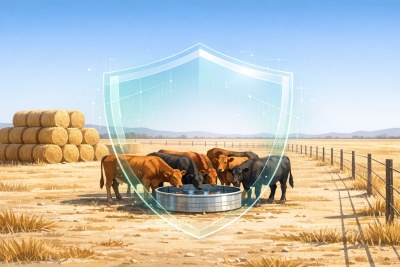
Dry Conditions Put Feed, Livestock and Insurance Planning Back in Focus?w=400

The information on this website is general in nature and does not take into account your objectives, financial situation, or needs. Consider seeking personal advice from a licensed adviser before acting on any information.

Recent rural reporting has again highlighted the strain dry seasonal conditions can place on livestock producers, particularly where pasture growth is limited, supplementary feed is expensive and water security is becoming a daily management issue.
For many Australian farm businesses, the immediate concern is practical: keeping stock in condition, deciding whether to buy feed, move animals, agist, or sell earlier than planned.

From an insurance perspective, the key lesson is that drought pressure rarely sits in one neat category. It can affect livestock values, fencing and water infrastructure, stored fodder, machinery use, transport decisions, public liability exposures and business cash flow. A dry paddock may start as a production issue, but it can quickly become a whole-farm risk issue if decisions are made under time pressure.

Farmers should be careful not to assume that all drought-related losses are automatically covered. Many policies treat gradual deterioration, lack of feed, poor seasonal growth and ordinary business losses differently from sudden insured events such as fire, storm, theft, accidental damage or specified livestock incidents. That distinction matters. A policy may respond to some events connected with a dry season, while still excluding the broader financial impact of drought itself.

This is why policy wording, livestock schedules and asset values deserve a fresh look before conditions deteriorate further. If stock numbers have changed, if breeders have been retained at higher values, or if feed and hay are being stored in larger volumes than usual, the sums insured may no longer match the real exposure. Producers may also need to consider whether temporary agistment, contract cartage or off-farm storage creates different obligations under their policy.

Good records are also important. Livestock counts, purchase and sale records, fodder inventories, photos of stored hay, machinery maintenance notes and water infrastructure invoices can all help if an insured incident occurs during a difficult season. They also make it easier to assess whether current insurance cover levels are still realistic.

For livestock operations, the current conditions are a reminder to review how livestock insurance fits alongside broader risk controls. Insurance is not a substitute for seasonal planning, but it can form part of a stronger financial safety net when it is matched to the farm’s actual activities, stock movements and asset values.

The most useful step is to review cover before decisions become urgent. Dry seasons reward early planning, clear documentation and a realistic understanding of what a policy can and cannot do.

Published:Tuesday, 25th Aug 2026
Author: Paige Estritori

Please Note: We do not endorse any specific products or companies. Some content is sourced from third parties, including press releases, and may not be independently verified for accuracy or completeness.

Share this news item:

Rate this article

0 Comments

No comments yet. Be the first to share your thoughts.

Insurance News

Why Cyber Risk Belongs in Every Restaurant Insurance Review
26 Aug 2026: Paige Estritori
Fresh attention on cyber incidents across Australian businesses is a timely warning for restaurants, cafés and takeaway operators. Hospitality venues may not always see themselves as data-heavy businesses, but modern food service increasingly depends on connected systems: point-of-sale terminals, booking platforms, delivery apps, QR ordering, loyalty databases, rostering tools and cloud accounting. - read more
Why Fatigue Management Is Again a Truck Insurance Issue
26 Aug 2026: Paige Estritori
Recent heavy vehicle compliance activity has again put fatigue management near the top of the risk agenda for Australian transport operators. While enforcement is usually framed as a road safety issue, it also has a direct insurance dimension. Insurers assessing truck insurance risk increasingly look beyond the vehicle itself and ask how well the business controls driver behaviour, scheduling pressure, maintenance downtime and record-keeping. - read more
Why Fresh Insurance Market Data Matters at Renewal Time
26 Aug 2026: Paige Estritori
APRA’s latest general insurance data has again highlighted a point many Australian tradies are already feeling at renewal time: a healthier insurance sector does not necessarily translate into simple or immediate premium relief for small businesses. While insurers continue to operate with stronger capital buffers and improved underwriting discipline, the costs sitting behind many policies remain under pressure. - read more
What Claims Complaint Trends Mean for Salon Insurance
26 Aug 2026: Paige Estritori
Fresh complaints reporting from the Australian Financial Complaints Authority has put insurance service standards back under the microscope, with claim delays, communication issues and disputed outcomes continuing to feature in the wider financial services complaints landscape. For beauty salon owners, skin clinics, nail technicians and mobile beauticians, the lesson is practical: the moment a loss occurs is not the best time to discover that records are incomplete, policy wording is unclear or a treatment has not been properly disclosed. - read more
What NSW Insurance Levy Reform Could Mean for Trade Businesses
26 Aug 2026: Paige Estritori
New South Wales insurance buyers may be heading for an important change as reform of the Emergency Services Levy continues to attract attention across the insurance sector. The levy has long been added to many insurance premiums in NSW to help fund emergency services, and insurers have argued that this approach makes cover more expensive for households and businesses that choose to insure. - read more


Farm Insurance Articles

Livestock Insurance in Australia: What Farm Owners Should Understand
Livestock insurance can help Australian farm owners manage financial risk when valuable animals are lost, stolen, injured or affected by specified insured events. This guide explains common cover types, exclusions, valuation issues and questions to ask before choosing a policy. - read more
New Technologies in Crop Protection: How Precision Agriculture Enhances Insurance Coverage
For generations, farmers have faced the challenge of protecting their crops from an array of threats, such as pests, diseases, and extreme weather. Traditional crop protection strategies have relied heavily on blanket approaches, as in using widespread pesticide application, or generalized irrigation systems, regardless of the varying needs across a field. While these methods have had their successes, they also come with limitations in efficiency, environmental impact, and the precision needed for optimal crop health and yield. - read more
Custom Farm Insurance: Tailoring the Perfect Policy for Your Agricultural Needs
Welcome to the world of farm insurance, where no two policies are the same, just as no two farms mirror each other in operations and risks. As a farmer, you are acutely aware that your agricultural endeavors bring a unique set of challenges and needs. Recognizing this diversity is the first step in protecting your livelihood. - read more
How Keyperson Insurance Can Safeguard Your Farm's Future
Keyperson insurance is a specialized type of business insurance designed to protect companies from the financial repercussions of losing a critically important team member. This type of insurance provides a payout that can help stabilize the business during the transition period following the loss of a key individual. In the context of farming, this might include someone who holds a unique skill set, deep agricultural knowledge, or critical business acumen that drives the success of the farm. - read more
On-Farm Safety: Insurance Tips to Minimize Accidents and Liability
For Australian farmers, every day presents a complex web of activities that demand not only their physical toil but also a keen attention towards safety. On-farm safety is paramount and is the shield that guards the well-being of both workers and operations in Australia's diverse agricultural landscape. It's not just about the immediate repercussions of accidents, but also their long-term impact on a farm's viability. - read more

Knowledgebase
Subrogation:
The process by which an insurance company seeks to recover the amount paid to the policyholder from a third party responsible for the loss.